
The Prepper Insider is reader-supported. When you buy through links on our site, we may earn an affiliate commission.
Human beings have the ingrained tendency to always seek to upgrade their lives by using better tools and equipment. With a few tweaks now and then, most products can easily be improved to provide greater value to the users. Using a piston upper on an AR-15 is one such improvement endeavor.
If you are looking to find the best AR-15 piston uppers and conversion kits without having to shoot yourself in the leg, then you have come to the right place. This article will take you through the best ones on the market so it is easy for you to pick one out. There are two ways to do it - using a piston-enabled upper or using a conversion kit to change into a piston one.
Read through to the end.
At a Glance: Our Top Picks for AR-15 Piston Uppers And Conversion Kits
- OUR TOP PICK: Adams Arms Standard Picatinny Block Piston Kit
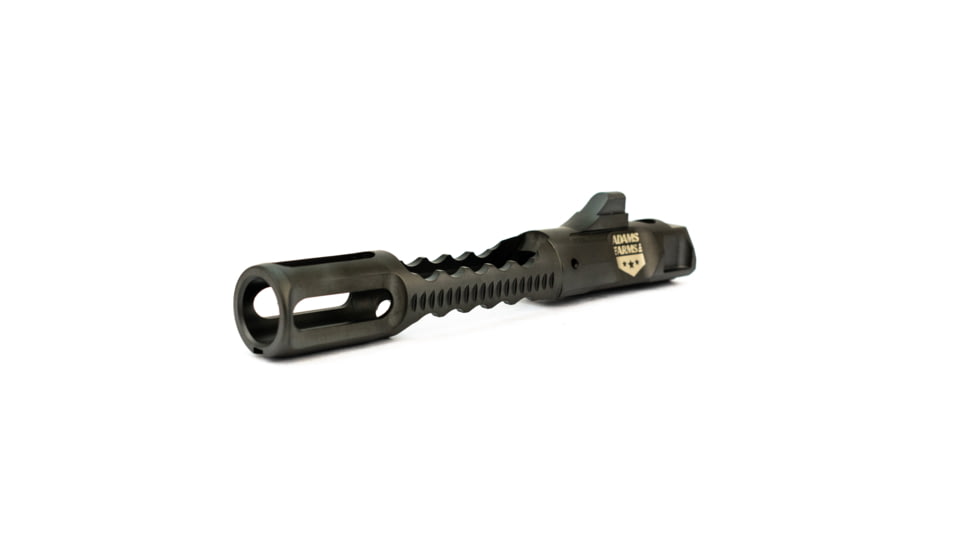
- RUNNER-UP: Adams Arms P Series Micro Block Carbine Length Piston Kit
- BEST BUDGET OPTION: Adams Arms P2 Upper - 16in Mid Length Gas
Comparison of the Best AR-15 Piston Uppers and Conversion Kits
| IMAGE | PRODUCT | |
|---|---|---|
Our Top Pick  |
| View Latest Price → |
 |
| View Latest Price → |
Best Budget Option 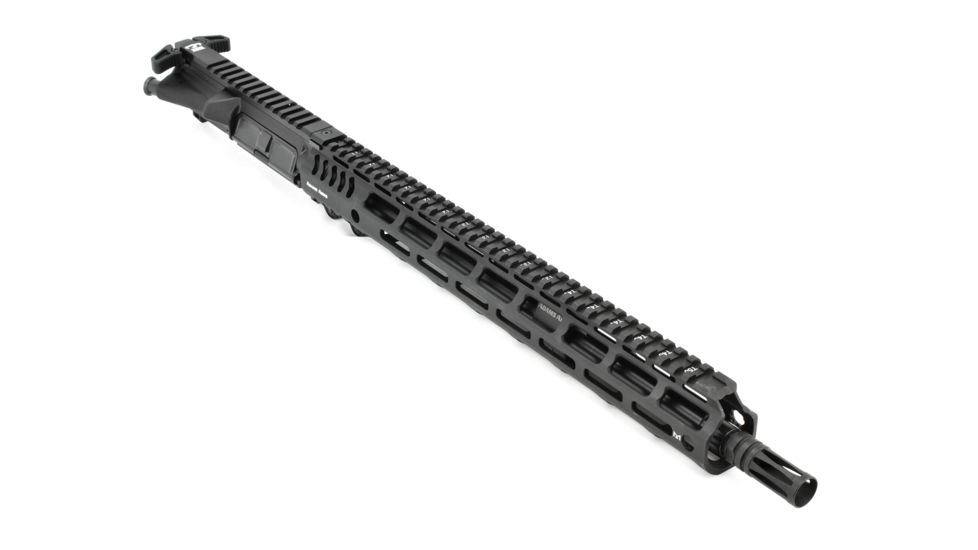 |
| View Latest Price → |
What is a Piston Upper Receiver and How Do They Work?
A piston upper receiver is one that uses a piston system to fire a bullet, eject the used shell, and cycle through to place another bullet in the chamber.
To understand how a piston receiver works, it’s important to note in the first place that the key thing to firing a round is to make the bolt carrier group work to fire the bullet, extract the spent cartridge, and load a new round into the chamber.
A piston upper does this in a way that the used gas does not cycle back to the bolt carrier group to initiate the reloading. When you fire, the gas forces the bullet through the barrel and hits the gas block, where it stops, hits a piston, and travels out at this point away from the gun user. The gas travels up and out of the barrel with an equal force which helps cycle the bolt carrier group.
Aspects of Our Favorite AR-15 Piston Uppers and Conversion Kits
The following are the key features that make great piston uppers and conversion kits:
Adjustable Piston Gas Block
An adjustable piston gas block allows the user to completely turn off the gas for single shots. However, to take the gas settings a notch higher, a good piston upper or conversion kit allows for not only restricting the gas flow, but also letting off some forward pressure to minimize the blowback, heat, and noise caused by the high pressure.

Adams Arms Standard Picatinny Block Piston Kit
Multiple Gas System Lengths
The length of the gas system refers to the distance from the receiver to the gas port. The longer the barrel, the longer the gas system. It is an important aspect because it determines the amount of time the bullet dwells in the barrel once fired. The longer the gas system, the lower the pressure exerted on the operating parts, which means they can last a long time. Gas system lengths come in fours:
Rifle length
Carbine length
Pistol length
Mid-length
Installed Bolt Carrier Group
Each piston upper receiver and conversion kit should come with its own bolt carrier group complete with a bolt spring. This group should allow for firing options between single shot and semi-auto. An even complex group would include room for the full-auto mode.
Reviews of the Best AR-15 Piston Uppers and Conversion Kits
Now that we know what a piston upper is and its key characteristics, let's review the ones that made it to our list.
Best Overall:
Adams Arms Standard Picatinny Block Piston Kit

Pros
Cons
Recent buyers recommend this block piston kit because the gas system adjustment features allow them to reduce or eliminate noise by turning the gas off. Most complain that the installation is not a walk in the park, even when they closely follow YouTube videos. The instructions are not clear and this makes them difficult to follow.
Why it Stands Out to Us
Including a high-tech coating system with a lifetime warranty makes the Adams Arms Picatinny piston kit stand out from the others in this review. To add to this is the left-handed option, which is an advantage to left-handed people because such kits and rifles are rare.
Bottom Line
If you are a left-handed gun user, then this kit is a rare kill for you as such kits are not common. The kit is more suitable for amateur and pro users as it would be easier for them to follow the installation instructions.
Runner-up:
Adams Arms P Series Micro Block Carbine Length Piston Kit

Pros
Cons
Recent buyers love this kit as it is easy to install and keep clean. Some dislike the bolt carrier coming in incomplete because this costs them time used to transfer parts from their existing bolt carrier group.
Why it Stands Out to Us
The patented, high-tech LifeCoat finish makes the kit stand out for its longevity even with everyday use. It also adds to the pleasant aesthetic appeal. Having a lifetime warranty is a unique characteristic for the kit as it means there is great confidence in its functionality, so the buyer should have no worries about adding it to their cart.
Bottom Line
To come across a piston kit so easy to install is an added advantage to the first time buyer looking for a simple piston kit to upgrade their rifle from the direct impingement system. But you will incur extra costs to do some modifications which will require that you buy extra parts. For instance, to use a 300BLK with the kit, you have to use the pistol gas length and low mass carrier for enhanced performance.
Best for the Money:
Adams Arms P2 Upper - 16in Mid Length Gas

Pros
Cons
What Recent Buyers Report
Recent buyers recommend this upper for its spot-on weight, handy barrel, and durable black matte finish that withstands exposure to atmospheric elements. Most buyers had a hard time finding the upper as it is popular and stocks out fast.
Why it Stands Out to Us
The Adams Arms P2 upper stands out with its handy rail that provides users with a variety of options. The flat-top rail allows you to mount a scope, can opener, laser, and sights of different types. It is also removable in two ways. First, you can move along to your liking. Secondly, you can remove it completely to obtain a high-speed and low-drag gun.
Bottom Line
Being a mid-length upper, it is good for beginners as shooting becomes easier because you are not slowed down by the barrel as would happen when using a rifle length forearm. This upper is for you if you like to have more sights on your gun. The handy rails allow you enough room for several of them.
Cautious Considerations to Keep in Mind
There are some less likable issues you have to consider when buying and using piston uppers and conversion kits. These are as discussed below:
Rarity of Parts
Since piston systems have little standardization, parts are hard to find and match correctly. If you pick one manufacturer, you have to stick with them probably in a love-hate relationship because some parts you might want to replace may fail to fit in your piston upper. As such, be sure to select a maker with a proven record and will be available for a long time to come.

Adams Arms P Series Micro Block Carbine Length Piston Kit
Reduced Accuracy
There are more moving parts in piston guns that can malfunction easily. The movement of the piston is believed to reduce accuracy. Since they use solid piston rods in place of hollow tubes, piston rifles have a heavier front-end. This affects accuracy especially when using a rifle length gun as the barrel would slow and weigh you down.
Comparison Overview
Direct Impingement vs Gas Piston
Similarities
Both systems are used to fire rounds, eject spent shells, and load new rounds into the chamber. They do this by using the gas force that results from firing to make the bolt carrier group shift rearwards to smoothly cycle through the ejection and reload in one swift process.
Differences
The main notable difference between a gas piston and direct impingement is where the gas shifts to upon assisting the bullet travel through the barrel. In the latter, the gas travels up the gas tube, back within the barrel, and into the gas key. As such, the dirty gas remains within the rifle.
In the gas piston mechanism, the spent gas is expelled from the rifle into the atmosphere. It does not cycle back to the bolt carrier group. When the gas reaches the gas block, it hits the solid piston and escapes through the gas port. This makes gas piston rifles cleaner than the DI ones.

Adams Arms P2 Upper - 16in Mid Length Gas
Spring Piston vs Gas Piston
Spring piston and gas piston rifles have a similar operating mechanism in the firing. They rely on the compression of air to propel the bullet forward through the barrel. Cocking the gun in the spring piston system compresses the spring within the cylinder. When the trigger is pulled, the air created by its decompression advances the bullet forward at high speed.
In the gas piston system, the air is compressed even more when the gun is cocked. Discharging the trigger causes pressure to build up, which helps propel the bullet out through the barrel.
The difference in the physical components is that the spring piston system has a cylinder and a coiled spring within it, while the gas piston system has a gas-filled cylinder instead.
Long Stroke vs Short Stroke Piston
Similarities
Both stroke systems are aimed at managing recoil to use it to the advantage of the shooter. They both comprise a bolt carrier group and piston, with the piston acting directly on the bolt carrier.
Differences
In the long stroke, the bolt carrier group and piston are joined. They recoil and travel together to and fro to complete the cycle.
In the short stroke, the bolt carrier group and piston are separate and move independently. The piston acts on the bolt carrier, making it move backwards. Even when the piston stops moving, the initial force on the bolt carrier causes it to keep moving backwards to complete the reloading cycle.
Direct Impingement vs Gas Piston Accuracy
Direct impingement systems are more accurate than gas piston ones. Since the latter have more moving parts, they are prone to malfunctions that lead to reduced shooting accuracy.

How to Install AR-15 Upper
- To install an AR-15 upper, first ensure your rifle is unloaded.
- Disassemble a rifle into its two halves. Remove the charging handle and bolt carrier group from the upper receiver. Disassemble the bolt carrier by removing the firing pin and retainer. Remove also the gas rings from the bolt.
- Install the bolt without the gas rings into the carrier, then Install the firing pin and retaining pin.
- Remove the handguards and disassemble the remaining parts to expose most of the barrel. Slide the handguard cap down the barrel and install the gas block.
- Hold the barrel in vice jaws. Use a level to check the levelness of both the upper receiver and gas block.
- Install the new bolt carrier group and charging handle into the upper receiver and then install the upper on the lower receiver. Compress the handguard retainer ring and install the handguards.
- Hold the rifle back in the jaws and install the flash hider. Bingo!
For a detailed overview of the entire installation process, be sure to watch the video below.
Conclusion
Upgrading from DI to the piston system is a good way to own a cleaner rifle. In this article, we have shed light on issues around piston systems, conducted a review of the best ones, and learned how they work and perform compared to their DI counterparts. We have also looked at how you can easily install an AR-15 upper on your own. That's a whole deal of information to ease up working with your best choice piston upper receiver and conversion kit.
People Also Ask
Let's wrap this up by discussing some of the common questions gun enthusiasts ask about piston uppers.
Can You Put a Piston Upper on Any Lower?
You can almost put a piston upper on any lower receiver. Corresponding parts from renowned manufacturers that are labeled as mil-spec should physically fit together. But there may be some exceptions, which explain the use of the word "almost". For example, Colt rifles manufactured after 2009 and before 1991 have smaller pivot and takedown pins and do not fit together with most parts from other brands.
Is Gas Piston AR Better?
A gas piston AR is better when cleanliness and heat reduction are considered, but these advantages will cost you some degree of accuracy. Cleanliness is improved because the gas exits the barrel after propelling the bullet, rather than flowing back into the chamber.

Does a Piston AR Need a Buffer Tube?
A piston AR still needs a buffer tube to facilitate the forward movement of the bolt carrier after firing. The buffer tube houses the buffer and buffer spring, the latter which helps propel the bolt carrier forward. However, some guns have designs that exclude the buffer tube, but they have different bolt, buffer, and spring types.
What Size Gas Port For Piston Upper?
A gas port is the small hole made into the barrel to allow the produced gases to escape. Its diameter depends on the length and thickness of the barrel, ranging between 11.5"-24" and 0.625"-0.825" respectively.
The following are some of the main gas port sizes:
- 24" barrel - 0.825" - port 0.089"
- 20" barrel - 0.625" - port 0.063" to 0.093"
- 16" barrel - 0.750" - port 0.070" to 0.086"
- 14.5" barrel - 0.750" - port 0.070" to 0.086"
- 11.5" barrel - 0.625" - port 0.081" to 0.089"
- Among others.
How Much Heavier Are Piston Uppers?
Although piston uppers are heavier than the direct impingement ones, this additional weight is quite negligible because it comes only from the solid piston and gas block. You may not even feel it, especially when you get used to handling the gun.