
The Prepper Insider is reader-supported. When you buy through links on our site, we may earn an affiliate commission.
While the AR-15 has minimal recoil compared to other firearms, it’s a rifle with some degree of muzzle rise. It’s possible to reduce muzzle movement for flat shooting and to get even less recoil with a customized build that includes a compensator or muzzle brake.
Here is what you need to know about these accessories and the products we think are the best choices for these categories.
At a Glance: Our Top Picks for AR-15 Compensators And Muzzle Brakes
- OUR TOP PICK: Lantac Dragon Muzzle Brake
- RUNNER-UP: Midwest Industries AR Muzzle Brake
- BEST BUDGET OPTION: SureFire Muzzle Brake/Suppressor Adapter
Comparison of the Best AR-15 Compensators and Muzzle Brakes
| IMAGE | PRODUCT | |
|---|---|---|
Our Top Pick  |
| View Latest Price → |
 |
| View Latest Price → |
Best Budget Option 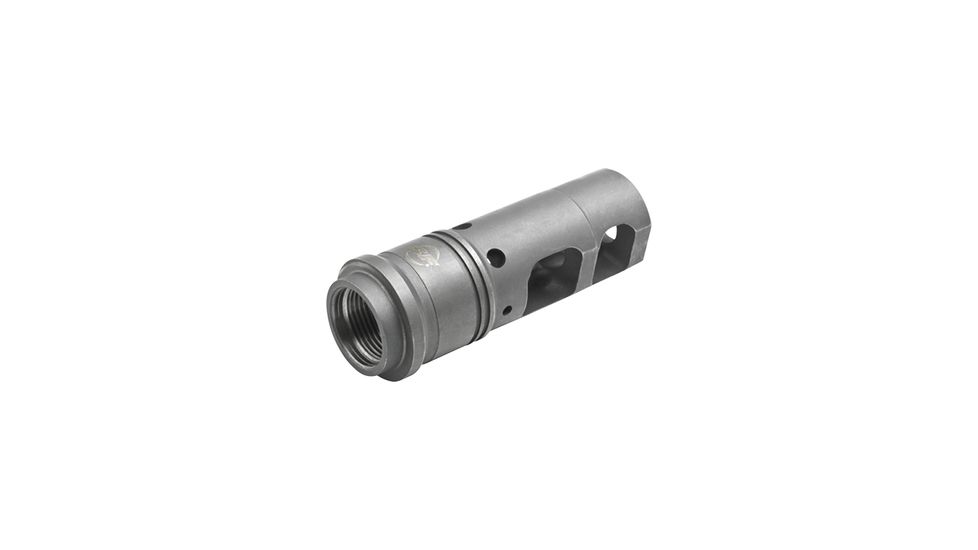 |
| View Latest Price → |
 |
| View Latest Price → |
 |
| View Latest Price → |
What is a Muzzle Brake? What Does a Muzzle Brake Do?
When you shoot a firearm, the chemical reaction that takes place inside of the barrel releases some propellant gases. The muzzle of the firearm can rise or move to the side as the gases exit the barrel. The purpose of a muzzle brake is to reduce this effect along with recoil.
How Does a Muzzle Brake Work?
A muzzle brake is an accessory you can mount on the muzzle of your AR-15. It redirects the propellant gases upward or to the sides to reduce muzzle movement and recoil.
Pros and Cons of Muzzle Brakes
By reducing muzzle rise or side movements, a muzzle brake allows you to realign with your target faster. It also reduces the amount of recoil you feel. Shooting feels more comfortable, and you will be less likely to feel pain in your shoulder.
The main downside of muzzle brakes is that redirecting propellant gases to the sides causes a loud noise and flash.

What is a Compensator? What Does a Compensator Do?
Compensators are another type of accessories you can mount on your AR-15 to reduce muzzle rise and recoil.
How Does a Compensator Brake Work?
Compensator brakes work in a similar fashion to muzzle brakes. However, these accessories have vents on the top to redirect the propellant gases upward. This action pushes the muzzle down and compensates for any rising movement that can happen when shooting.
Pros and Cons of Using a Compensator Brake
Like a muzzle brake, a compensator brake helps you stay on target. Venting gas to the top prevents potential visibility issues when shooting low to the ground since the shot won’t kick up any dust. It’s also quieter than a muzzle brake.
The main downside of a compensator brake is that it won’t reduce recoil as much as a muzzle brake.
Why Did These AR-15 Compensators and Muzzle Brakes Make Our List?
We selected some quality accessories so you can customize your AR-15 build with confidence. Here are some of the features we took into consideration.
Muzzle Rise
We looked at how well the compensator or muzzle brake controls muzzle rise. We looked for manufacturers with innovative products that use smart designs to redirect gas effectively.
Recoil
Compensators and muzzle brakes can reduce the recoil you feel. We looked for accessories that produce a noticeable difference.

Lantac Dragon Muzzle Brake
Flash and Noise
Flash and noise are two drawbacks associated with these accessories. We took the extent of the noise and flash produced to select products that minimize these drawbacks.
Easy to Install
We chose accessories you can mount and remove easily to customize your AR-15.
Quality
The products we chose to use quality materials and the manufacturers stand behind these accessories.
Review of the Best AR-15 Compensators and Muzzle Brakes
These are the best compensators and muzzle brakes for reducing muzzle rise and recoil.
Best Overall:
Lantac Dragon Muzzle Brake

Pros
Cons
What Recent Buyers Report
Recent reviewers like this muzzle brake because it does an excellent job with muzzle climb and recoil. It’s a quality accessory with a durable coating and a majority of buyers like the design. Reviews also mention that the installation process is easy, and people feel that this muzzle brake is worth the money.
Why it Stands Out to Us
This muzzle brake from Lantac stands out thanks to its durable steel construction and quality coating. It has received a lot of excellent reviews, and many AR-15 owners swear by this product.
The muzzle brake uses symmetrical holes to redirect gases to the side for flat shooting. The flared baffle design is an interesting feature because it optimizes the size of the surface where gases are in contact with the accessory. It’s a feature that redirects gases more effectively.
You can expect a precise thread for an easy installation process and will notice a difference when it comes to recoil and muzzle rise when you try the accessory. You will get accurate results and can use the muzzle brake on full auto fire. Flash isn’t a major issue compared to other muzzle brakes.
The Short Energy Pulse system reduces the duration of the recoil you feel. You can keep shooting without feeling the effects of the recoil and can stay on target more easily.
Bottom Line
This hardened steel accessory is more expensive than other muzzle brakes, but it’s worth every penny if you’re looking for performance and durability. We like that it works well for muzzle climb and recoil and think the innovative flared baffle design makes this brake more effective than other products.
Runner-up:
Midwest Industries AR Muzzle Brake

Pros
Cons
What Recent Buyers Report
This muzzle brake has received positive reviews from shoppers who mention the excellent value of this accessory. It does an amazing job when it comes to reducing muzzle rise and recoil to some extent. People love the design and say that noise and flash aren’t a deal breaker as long as you use hearing protection.
Why it Stands Out to Us
We recommend this muzzle brake because it’s a quality accessory that does an outstanding job of tackling muzzle climb on a budget. If you want to upgrade your AR-15 without breaking the bank, our runner-up choice is a must-have accessory.
This brake uses two chambers to eliminate propellant gases more effectively. The large openings allow gases to exit quickly and minimize recoil. The lateral position of the openings means the gases exit on the sides for a flat shooting experience.
The durable steel design and phosphate finish look great and make this muzzle brake an excellent investment for the long-term. It’s not as performing as other brakes in terms of minimizing recoil, but you will still feel a difference.
Bottom Line
This muzzle brake delivers an outstanding performance in the under $100 price range. We like this durable steel accessory because the two-chamber design and large lateral openings are effective for redirecting propellant gases.
Best for the Money:
SureFire Muzzle Brake/Suppressor Adapter

Pros
Cons
What Recent Buyers Report
Reviews for this SureFire muzzle brake are overwhelmingly positive. Buyers report that it’s easy to install and delivers an amazing flat-shooting experience. They like the design and performance. Reviewers also like that it doubles as an adapter for a series of suppressors and recommends using one of these suppressors to minimize the loud blast.
Why it Stands Out to Us
It’s a convenient two-in-one accessory that opens up new possibilities for customizing your AR-15. It’s easy to install and instantly upgrades your firearm by reducing muzzle rise and recoil.
This muzzle brake doubles as an adapter for the SureFire SOCOM Series Fast-Attach Suppressors. You can attach any suppressor from this series to the mount of the muzzle brake to reduce sound and muzzle flash. These suppressors use a short design to avoid adding weight to your firearm.
The Fast-Attach design is convenient since you can install and remove the suppressor as needed, and still benefit from the recoil and muzzle rise suppression of the brake once you remove the suppressor.
Bottom Line
This accessory is a great option to reduce recoil and muzzle movements. It doubles as an adapter for a line of performing suppressors that are ideal for addressing the loud blast that you will get once you attach a muzzle brake to your AR-15.
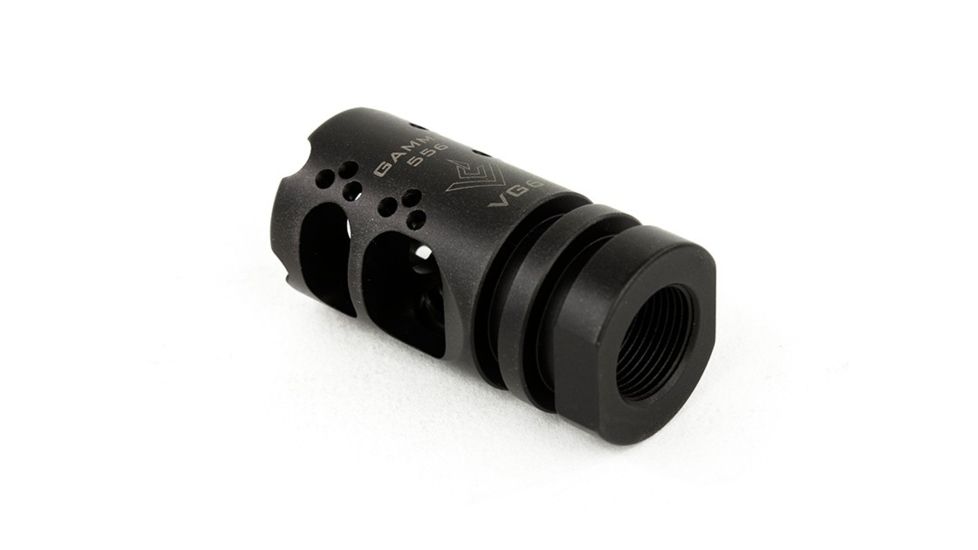
4. VG6 Precision Gamma 556

Pros
Cons
What Recent Buyers Report
There are many positive reviews for this VG6 muzzle brake. Buyers report it being excellent for recoil reduction. It also minimizes muzzle movements. People love the nitride finish and the quality workmanship.
Why it Stands Out to Us
The manufacturer used computer-aided engineering to produce a smart design that redirects the gas flow with precision. Using technology to tweak the design results in superior performance.
This muzzle brake has a unique shape and uses a mix of small and large openings to direct propellant gases to the sides. It does a great job if you’re looking for a flat shooting experience and want less felt recoil.
The sleek black design will make a great addition to your AR-15 build, and the heat-treated stainless steel is a durable option.
It’s a versatile accessory you can use with standard .223 Remington and 5.56x45mm NATO ammunition for your AR-15, along with .224 Valkyrie caliber ammunition.
Bottom Line
While this muzzle brake is loud, it does an amazing job with the flat shooting. It’s the perfect choice for a durable build, and we like the smart design that eliminates propellant gases as effectively as possible.
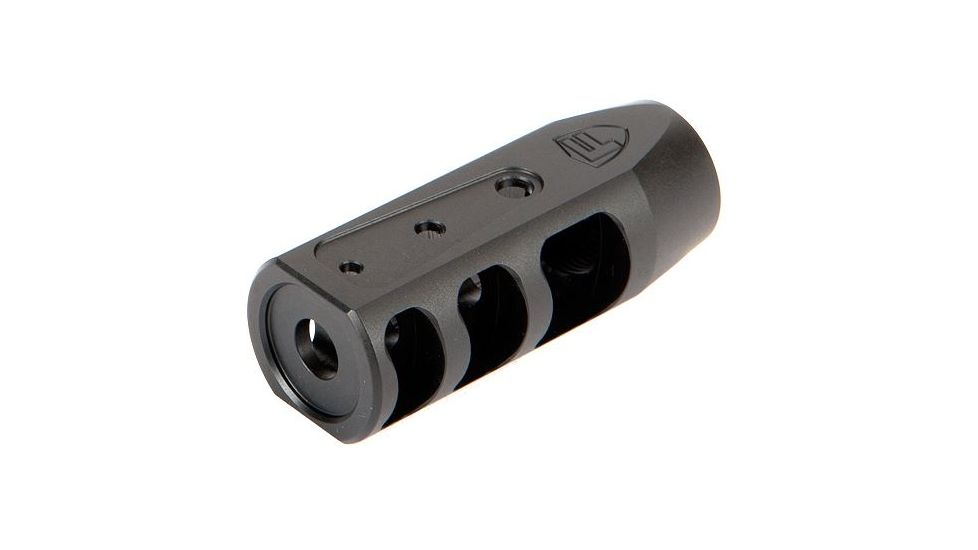
5. Fortis Manufacturing 5.56MM R.E.D

Pros
Cons
What Recent Buyers Report
A majority of buyers are happy with their purchase. They feel that this muzzle brake is a great option for reducing felt recoil. Reviews mention that this accessory does an excellent job with muzzle rise and that flash remains minimal.
Why it Stands Out to Us
You can’t go wrong with this muzzle brake if you’re looking for an affordable way of upgrading your AR-15. It costs under $100 and delivers excellent muzzle climb suppression for this price range.
Overall, it’s a well-designed and durable accessory that does what you expect. The design is slightly bulkier than other similar accessories. It features three large openings to direct gases to the sides, while other brakes use a mix of large and small openings for more precise control of the gas flow.
We recommend this muzzle brake because it has received a large number of excellent reviews. It’s a durable product, it’s easy to install, and it gets the job done if it’s flat shooting you’re after.
Bottom Line
This muzzle brake makes flat shooting and reduced recoil possible on a budget. We like the large openings of this muzzle brake, the simple design, and the sturdy build.
Muzzle Brake vs Compensator – Comparison Overview
What is the difference between a muzzle brake and a compensator? While these two accessories have a similar purpose, there are some important differences to consider.
Recoil and Muzzle Movement
Muzzle brakes and compensators share a similar purpose. These two types of accessories prevent muzzle climb to deliver a flat shooting experience and redirect propellant gasses to reduce recoil as much as possible.
A muzzle brake is typically the best option if your priority is to reduce recoil. These accessories use large openings that allow gasses to exit the firearm without any resistance. The design of these openings often angles the gas flow toward the sides or shooters to push the firearm away from the shooter and reduce the felt recoil.
A compensator works by redirecting gases to the sides or top. By allowing gases to exit in a controlled manner, a compensator reduces muzzle climb over recoil. Adding a compensator to your AR-15 will reduce felt recoil, but the effect won’t be as noticeable as with a muzzle brake.
Both types of accessories are a good option for an AR-15 since it’s not a firearm with a significant amount of recoil.

Lantac Dragon Muzzle Brake
Installation and Design
Muzzle brakes and compensators share similar designs and installation methods. You can upgrade your AR-15 by threading one of these accessories to the barrel. Using a crush washer is a common installation method, but you can also install these accessories with a peel washer or locking nut.
The main difficulty you might encounter during the installation process is getting the muzzle brake or compensator aligned with your barrel.
When it comes to design, muzzle brakes and compensators look similar. These accessories have a similar size and shape, but you will notice some differences if you look at the size, position, and angle of the openings.
Drawbacks
Noise and flash are the two most common drawbacks associated with these accessories. You should know that adding a muzzle brake or compensator to your AR-15 will result in a loud blast and concussion. You can also expect a more noticeable flash.
Noise and flash might be more noticeable with a muzzle brake compared to a compensator.

VG6 Precision Gamma 556
How to Install a Compensator
Installing a compensator is a simple process you can do at home with a few tools. Your compensator will usually come with a crush washer you can use to mount it on your AR-15.
Using a crush washer is a quick and easy installation method, but you might need to pre-crush the washer with a vise to get a tight fit. You will also need to replace the crush washer if you remove the compensator and decide to install it again.
A lot of manufacturers sell pre-lubed accessories. However, you will need to add lubrication if you purchased a compensator that isn’t pre-lubed.
Here are the steps to follow to install a compensator:
- Ensure that the muzzle of your AR-15 is clean of dust and debris.
- Slip the crush washer over the muzzle of your firearms. The narrow side should touch the muzzle and the flared side should be up.
- Attach the compensator and screw it by hand. Turn it clockwise until you get a tight fit. It should touch the crush washer.
- Finish tightening the compensator by using a combo wrench. Tighten it until the center cut on the compensator aligns with the barrel of your AR-15.
You can watch this process in the following YouTube video:
How to Install a Muzzle Brake
Installing a muzzle brake is very similar to installing a compensator. Here are the steps to follow:
- Lubricate the thread on your AR-15 muzzle if needed.
- Slip the crush washer over the muzzle. Make sure you have the flared side up and the narrow side touching the muzzle.
- Tighten the muzzle brake by hand until it touches the crush washer.
- There is a slot or line on the top of the muzzle brake that should align with the gas port of your AR-15.
- Finish tightening the muzzle brake with a wrench. If you feel resistance, loosen the accessory, and tighten it again. Repeat this process until you can align the muzzle brake slot with the gas port.
- Check the alignment with a ruler or another accessory. Use the wrench to loosen and tighten the muzzle brake again if you need to adjust the alignment.
The following YouTube video is a great place to start if you need help with installing a muzzle brake:
Conclusion
The AR-15 is a popular firearm, but the muzzle climb is a bit of a drawback. It’s an issue you can fix by adding a compensator or muzzle brake to your rifle. Even though recoil isn’t a major problem on the AR-15, you will get the added benefit of reduced felt recoil with these accessories.
If you want to customize your AR-15 build and get flat shooting as well as less recoil, we recommend the Lantac Dragon Muzzle Brake. It’s a durable and performant accessory that addresses muzzle rise and recoil while limiting flash.
People Also Ask
Here are a few common questions about compensators and muzzle brakes.
How Much Does it Cost to Install a Muzzle Brake?
You can find muzzle brakes in the $50 to $200 price range. If you want to have a gunsmith install it for you, count $100 for threading your barrel and $100 to $200 for installing the accessory.
Do Compensators Reduce Recoil?
Compensators reduce felt recoil to some degree, but they’re not as effective as muzzle brakes if your priority is recoil.
Does a Compensator Affect Accuracy?
A compensator doesn’t make your shooting more accurate, but it can help you re-align with your target a lot faster by reducing muzzle climb.
Do Muzzle Brakes Damage Scopes?
A muzzle brake results in a strong concussion effect when you shoot your firearm. This concussion can damage the optics in your scope.
Do Muzzle Brakes Make Guns Louder?
The answer is yes. Redirecting propellant gases to the sides reduces in a deafening blast. You should always wear hearing protection when shooting a firearm with a muzzle brake.

Fortis Manufacturing 5.56MM R.E.D
Do Compensators Increase Noise?
Compensators also increase noise. However, the blasting effect will be more noticeable with a muzzle brake.
What is the Difference Between a Compensator and Muzzle Brake?
A compensator pushes gases to the sides or towards the shooter to compensate for recoil. A muzzle brake primarily addresses muzzle movements by redirecting gases upward or to the sides.
Are Compensators Effective?
Compensators are effective accessories, provided that you choose one from a reliable manufacturer.
How to Time a Muzzle Brake
Your muzzle brake should have a slot or line on the top. You need to align this slot with the gas port of your gun to time your muzzle brake.
How to Remove a Muzzle Brake
Removing a muzzle brake is very easy. Use a wrench to loosen it gently, and turn counterclockwise to remove it from the barrel thread.